Novo Nordisk sues Hims & Hers for patent infringement
Novo Nordisk sued telehealth company Hims & Hers over compounded semaglutide, its first US patent case against a compounder, days after the FDA moved to restrict GLP-1 ingredients.
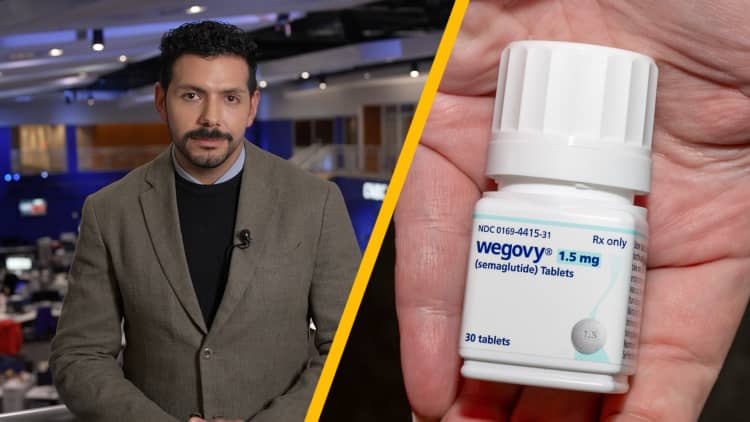
Novo Nordisk filed a patent infringement lawsuit against telehealth company Hims & Hers on February 9, 2026, alleging that Hims' compounded semaglutide products infringe US Patent No. 8,129,343 [1]. The drugmaker asked a court to permanently bar Hims from selling unapproved compounded drugs that infringe its patents and is seeking monetary damages [1][5].
The patent covers semaglutide, the active ingredient in both the pill and injectable versions of Wegovy as well as the diabetes drug Ozempic, and it does not expire until 2032 [4]. Reuters reported that this is Novo's first US patent case against a compounder; the company had previously sued compounders mainly over trademark and deceptive-marketing claims [3]. Novo's general counsel John Kuckelman told CNBC the company has filed roughly 130 lawsuits over deceptive marketing and consumer fraud so far [5].
What triggered the suit
The filing followed a fast-moving week. On February 5, Hims launched a compounded oral GLP-1 priced at $49 for the first month, undercutting the $149 charged for Novo's FDA-approved Wegovy pill, which the FDA cleared in late December 2025 and which launched in January 2026 [4][5][6]. On February 6, the FDA said it intended to restrict GLP-1 active pharmaceutical ingredients used in non-FDA-approved compounded drugs and to crack down on misleading direct-to-consumer advertising, warning that violators could face "seizure and injunction" without further notice [2][6]. The agency specifically named Hims & Hers in that announcement and referred the company to the Department of Justice over potential violations [5][6]. Hims said on Saturday, February 7, that it would stop offering the compounded pill [3][5].
Novo says the injectable compounded products are still being sold. The company alleges Hims "continues to unlawfully mass compound injectable versions, made with inauthentic API" [1]. Reuters reported the injectable version remained on the Hims website and that the company did not respond when asked whether it would stop making them [3].
The impurity claims
Novo pointed to its own testing as part of its case. According to the company, compounded injectable semaglutide it tested contained impurity levels as high as 86%, and compounded oral versions contained impurities of up to 75% [2]. Novo warned those impurities could lead to immune reactions, hospitalization, severe drug-drug interactions, overdoses and anaphylactic shock [2]. The sources do not describe how many samples were tested, where they came from, or how the testing was done, so those details are not yet known. The figures come from the manufacturer suing, not an independent lab or regulator.
Hims rejected the suit, calling it "a blatant attack by a Danish company on millions of Americans who rely on compounded medications for access to personalized care" and accusing "Big Pharma" of "weaponizing the US judicial system to limit consumer choice" [3][5]. Hims has argued its versions are legal because they are personalized in dosage [5].
Markets reacted sharply, though accounts differ slightly: Reuters reported Novo shares rose 5% and Hims sank 20%, while CNBC reported Novo's Copenhagen-listed shares climbed more than 3% and Hims fell more than 18% [3][5].
Why it matters for patients
Novo estimated in January that as many as 1.5 million Americans are using compounded GLP-1 drugs [5]. Semaglutide is no longer in shortage in the US, which removes the legal justification that allowed broad compounding during the shortage years [2][5]. Between the FDA's ingredient restrictions and lawsuits like this one, people currently getting compounded semaglutide through telehealth platforms may see products discontinued with little warning, as happened with the Hims pill two days after launch [1][5].
Price is the other side of the equation. Compounded options have been cheaper, but branded prices have moved: Pharmacy Times reported that on TrumpRx, semaglutide tablets were listed at $149 to $299 a month and semaglutide injections at $199 to $349, against a $1,349 list price, with tirzepatide injections at $299 to $449 [6].
What happens next
The case did not go to trial. On March 11, 2026, Pharmacy Learning Network reported that Novo Nordisk dropped the patent suit after Hims & Hers agreed to stop promoting compounded GLP-1 products and instead offer FDA-approved Ozempic and Wegovy [2]. The FDA's broader enforcement plan against mass-marketed compounded GLP-1 products remains in motion, including possible seizures and injunctions against companies that do not correct violations [2][6].
Sources
- https://www.novomedlink.com/content/dam/novomedlink/semaglutide/02-09-2026-company-statement.pdf
- https://www.hmpgloballearningnetwork.com/site/pln/news/novo-nordisk-sues-hims-hers-fda-moves-restrict-compounded-glp-1-drugs
- https://www.reuters.com/sustainability/boards-policy-regulation/novo-nordisk-shares-rise-hims-abandons-49-weight-loss-pill-2026-02-09/
- https://www.statnews.com/pharmalot/2026/02/09/novo-sues-hims-infringing-wegovy-patent-obesity
- https://www.cnbc.com/2026/02/09/novo-nordisk-sues-hims-hers-compounded-obesity-drugs.html
- https://www.pharmacytimes.com/view/fda-and-novo-nordisk-warned-of-glp-1-telehealth-compounding-take-down-what-s-next-
Semaglutides.org is for information only and is not medical advice. Always talk to a licensed healthcare provider about your own care. Some links to telehealth services are affiliate links, labeled where they appear.