CMS publishes Medicare GLP-1 Bridge frequently asked questions
CMS's FAQ spells out who qualifies for Medicare's GLP-1 Bridge, which drugs are covered and a flat $50 monthly copay starting July 1, 2026 [1].
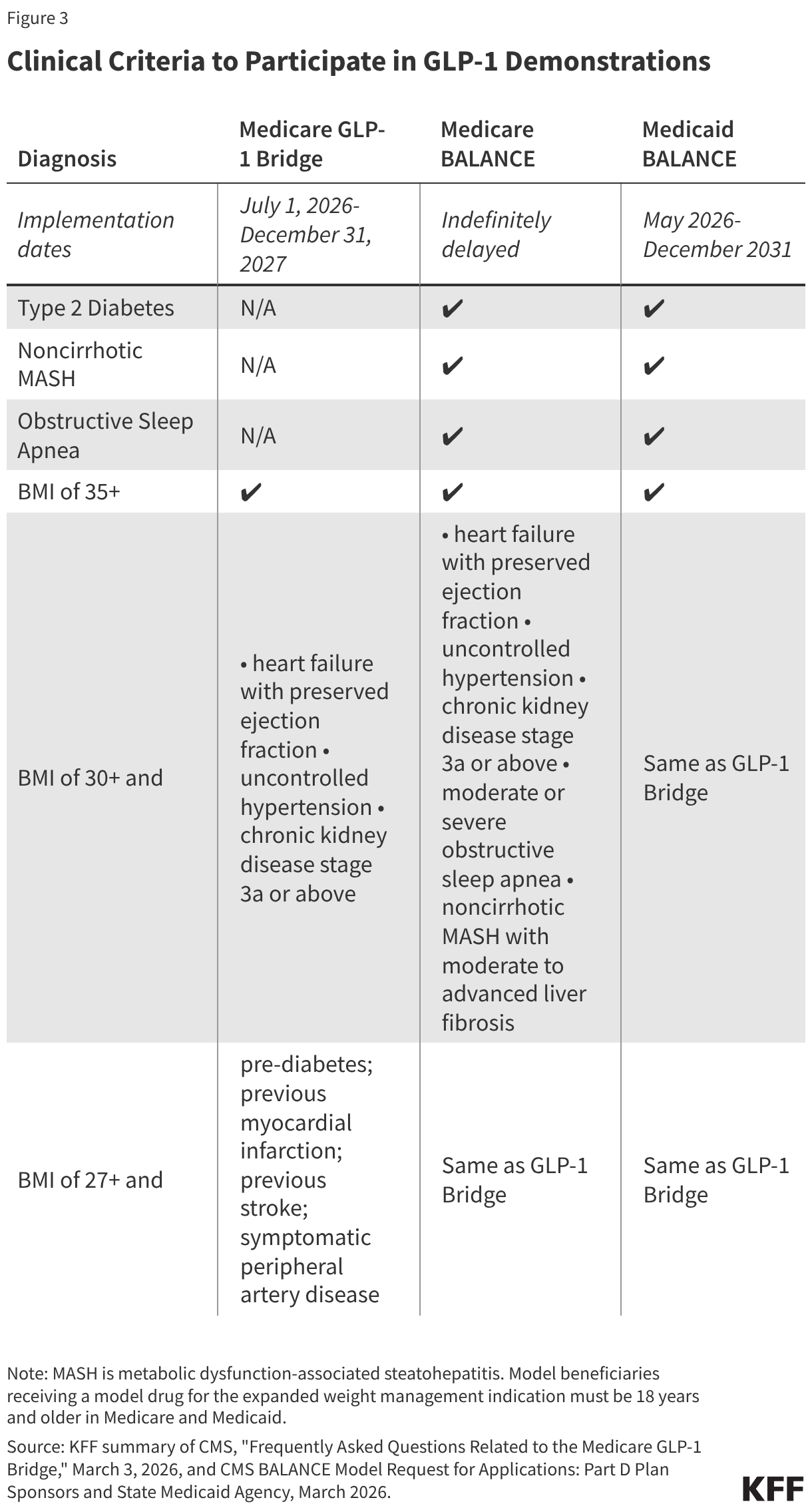
Medicare's first broad coverage of GLP-1 drugs for weight reduction comes with a rulebook. CMS published frequently asked questions describing how the Medicare GLP-1 Bridge will work, including the prior authorization paperwork doctors must file, the clinical criteria patients must meet, and a flat $50 monthly copay [1]. Coverage begins July 1, 2026 [1].
The Bridge is a short-term nationwide demonstration created under Section 402 demonstration authority, and it sits outside regular Part D coverage [1]. That structure matters: Part D plan sponsors do not have to opt in for their enrollees to get access, and sponsors bear no financial risk for the costs of the demonstration [1]. Medicare is otherwise barred by law from covering drugs used specifically for weight loss, so people with Medicare can normally get GLP-1s covered only for other FDA-approved uses such as type 2 diabetes, cardiovascular risk reduction, or sleep apnea [1].
Which drugs and who qualifies
The demonstration covers a specific list: all formulations of Foundayo (orforglipron) and Wegovy (semaglutide), plus the KwikPen formulation of Zepbound (tirzepatide) [1]. The copay is $50 per month [1].
To qualify, a prescriber must submit a prior authorization request attesting that the drug is being prescribed to reduce excess body weight and to maintain that reduction, and that the beneficiary falls into one of three clinical categories [1]. Those are: a BMI of 35 or higher; a BMI of 30 or higher plus heart failure with preserved ejection fraction, uncontrolled hypertension, or chronic kidney disease stage 3a or above; or a BMI of 27 or higher plus pre-diabetes, a previous heart attack, a previous stroke, or symptomatic peripheral artery disease [1]. Beneficiaries must be 18 or older [1].
Notably, type 2 diabetes, noncirrhotic MASH and obstructive sleep apnea are not qualifying diagnoses for the Bridge on their own, though they appear in the broader BALANCE Model criteria [1].
The development summary also states the $50 copay will not count toward the Part D out-of-pocket cap. The KFF analysis available here does not address how the copay interacts with that cap, so the details behind that point are not confirmed in the source material reviewed for this story.
How the Bridge fits with BALANCE
CMS originally planned a two-step approach: the Bridge for 2026, followed by the larger BALANCE Model in Medicare Part D starting January 2027 and running through December 2031 [1]. That plan changed. On April 21, 2026, CMS announced an indefinite delay of the BALANCE Model in Part D and extended the Bridge through December 31, 2027, instead of its original December 31, 2026 end date [1]. On the Medicaid side, BALANCE is launching for states on a rolling basis from May 1, 2026 through January 1, 2027, with a July 31, 2026 application deadline for state Medicaid agencies and an end date of December 31, 2031 [1].
Why it matters for patients
Cost has been the main barrier. In KFF polling, 56% of GLP-1 users said the drugs were difficult to afford, including one in four who called them "very difficult" [1]. A fixed $50 monthly copay is a sharp change from paying cash, but it applies only to the listed drugs and only to people who clear the prior authorization criteria [1].
The demonstration is also temporary by design. Coverage runs from July 1, 2026 to December 31, 2027, and what happens afterward is not settled, especially with the Part D version of BALANCE indefinitely delayed [1]. Medicaid coverage remains uneven: only 13 states covered GLP-1s for obesity as of January 2026, down from 16 in 2025 [1].
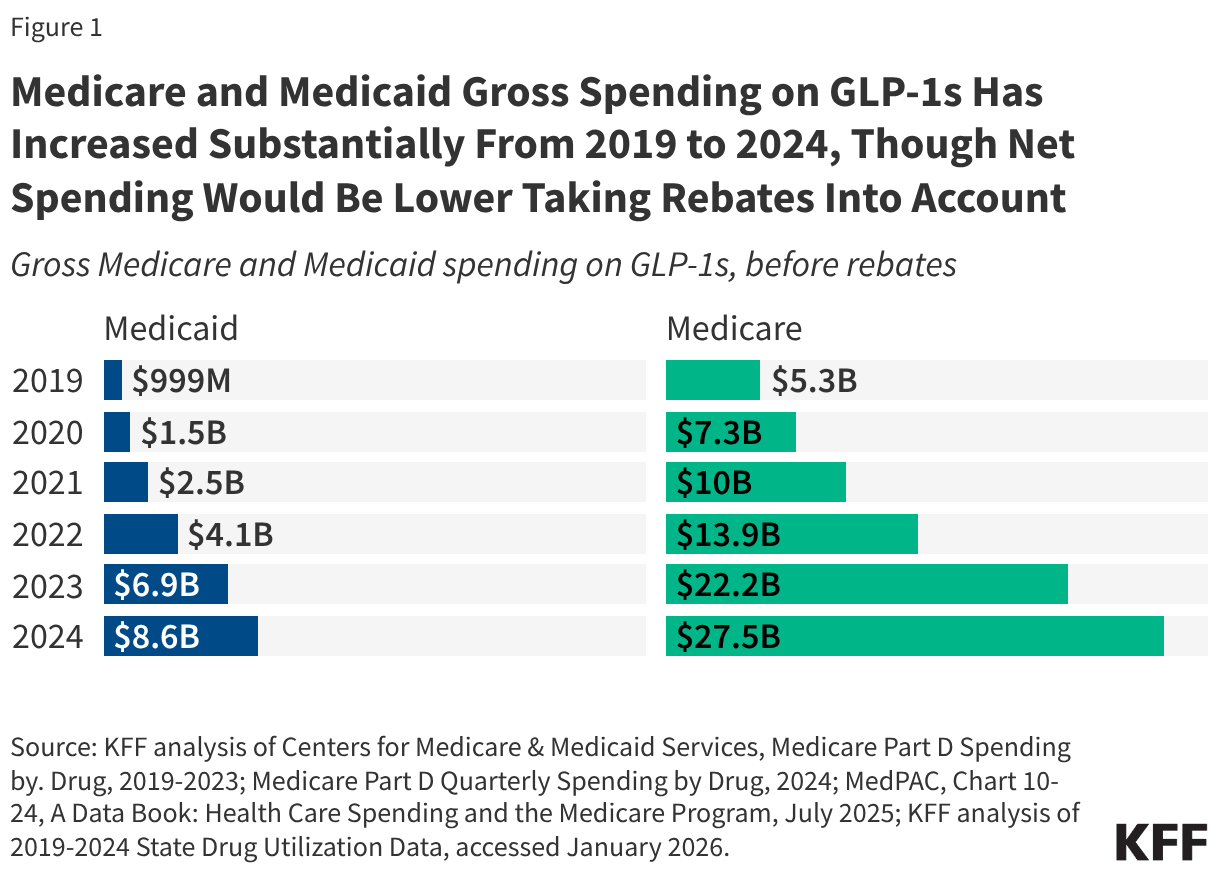
Spending context helps explain the caution. In 2024, Medicare recorded 21.8 million GLP-1 claims and $27.5 billion in gross spending before rebates; Medicaid recorded 8.4 million prescriptions and $8.6 billion [1].
What happens next
Coverage starts July 1, 2026 [1]. States have until July 31, 2026 to apply for Medicaid BALANCE [1]. Separately, semaglutide was selected for Medicare drug price negotiation in 2025, with a negotiated price taking effect in 2027 [1]. The Bridge is scheduled to end December 31, 2027 [1].
Images from the sources
Sources
Semaglutides.org is for information only and is not medical advice. Always talk to a licensed healthcare provider about your own care. Some links to telehealth services are affiliate links, labeled where they appear.