GLP-1 BALANCE Model is delayed indefinitely in Medicare after Part D sign-up deadline passes
A sign-up deadline for insurers passed with Medicare's obesity-drug model now indefinitely delayed, leaving a temporary bridge program that charges a $50 monthly copay through 2027.
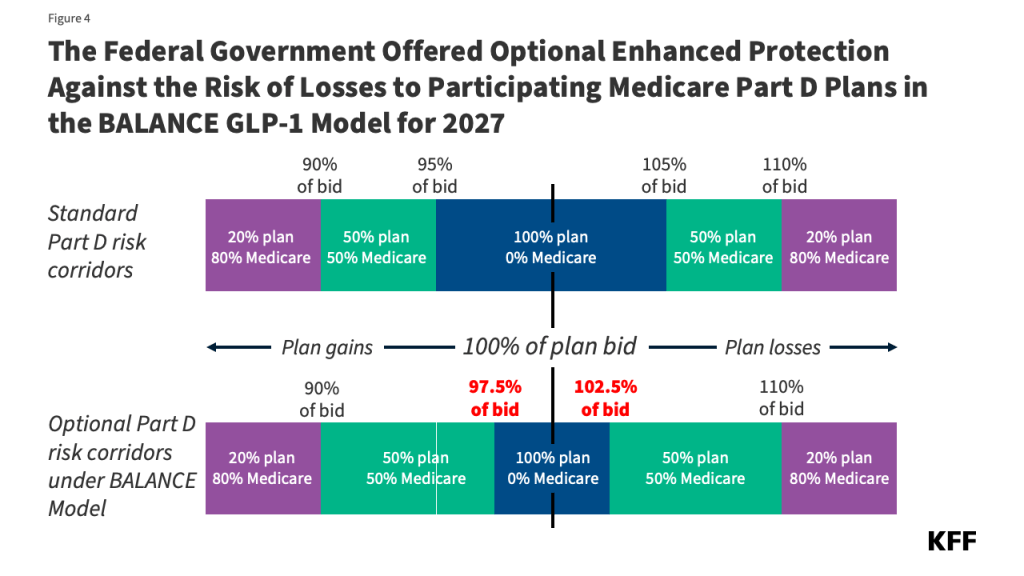
Medicare Part D plan sponsors had until April 20, 2026 to apply for the BALANCE Model, the demonstration program CMS proposed to expand coverage of GLP-1 obesity drugs [1]. One day after that deadline, on April 21, 2026, CMS announced an indefinite delay of the BALANCE Model in Medicare Part D [1].
The model had been scheduled to run in Medicare from January 2027 through December 2031 [1]. CMS had set an 80% enrollment participation threshold for the model to proceed in 2027, meaning plans covering that share of eligible Part D enrollment needed to sign on. CMS has not disclosed how many plan sponsors applied.
What replaces it, for now
With the Medicare side of the model on hold, Medicare coverage of obesity GLP-1s runs through the Medicare GLP-1 Bridge, a nationwide demonstration that begins July 1, 2026 and now runs through December 31, 2027. It had originally been scheduled to end December 31, 2026 [1].
The Bridge is separate from Part D. Sponsors do not have to opt in, and they bear no financial risk for costs their enrollees incur under the demonstration [1]. Beneficiaries who qualify pay a $50 monthly copayment [1]. The covered products are all formulations of Foundayo (orforglipron) and Wegovy (semaglutide), plus the KwikPen formulation of Zepbound (tirzepatide) [1].
To qualify, a provider must submit a prior authorization request attesting that the drug is prescribed to reduce excess body weight and to maintain weight reduction, and that the patient is 18 or older and meets one of several clinical criteria: a BMI of 35 or higher; a BMI of 30 or higher along with heart failure with preserved ejection fraction, uncontrolled hypertension, or chronic kidney disease stage 3a or above; or a BMI of 27 or higher along with prediabetes, a previous heart attack, a previous stroke, or symptomatic peripheral artery disease [1].
Medicaid is still moving ahead
The BALANCE Model continues for Medicaid, where it begins in May 2026 and runs through December 2031, launching for state agencies on a rolling basis through January 1, 2027 [1]. States have until July 31, 2026 to apply [1]. Medicaid BALANCE uses the same BMI-based criteria as the Bridge and also covers type 2 diabetes, noncirrhotic MASH, and obstructive sleep apnea [1].
Medicare is prohibited by law from covering drugs used specifically for weight loss, so Part D plans cover GLP-1s only for other FDA-approved uses such as type 2 diabetes, cardiovascular risk reduction, or sleep apnea [1]. Federal law leaves it up to states whether to cover weight-loss drugs in Medicaid; 13 states covered GLP-1s for obesity as of January 2026, down from 16 in 2025 [1].
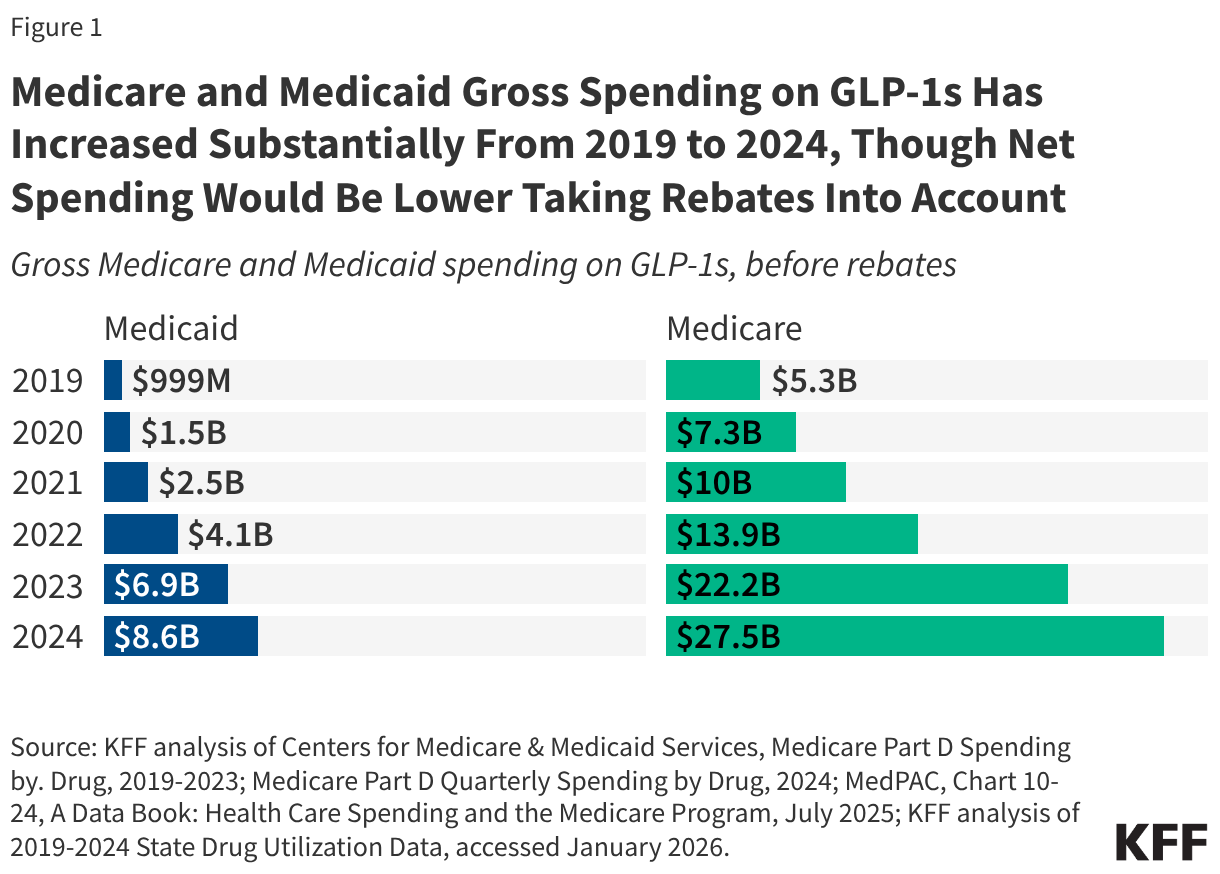
Gross Medicare spending on GLP-1s reached $27.5 billion on 21.8 million claims in 2024, and Medicaid spending reached $8.6 billion on 8.4 million prescriptions, both before rebates [1]. In KFF polling, 56% of GLP-1 users said the drugs were difficult to afford, including one in four who said they were "very difficult" to afford [1].
Why it matters for patients
The delay means the broader Medicare coverage that would have started in 2027, including for type 2 diabetes, MASH, and sleep apnea, is not available on that schedule [1]. For a Medicare beneficiary seeking an obesity GLP-1, the Bridge is the near-term route, and it comes with conditions: a prior authorization, BMI and diagnosis criteria, and a list limited to Foundayo and Wegovy in all formulations and Zepbound only as the KwikPen [1]. Someone who does not meet those criteria, or who uses a different product or formulation, is not covered through this demonstration, and the brief does not describe other new coverage [1].
For people on Medicaid, access depends on whether their state applies and is accepted, since state participation is optional and launches on a rolling basis [1]. The brief does not say how many states are expected to join or whether the delayed Medicare model will be revived.
What happens next
- May 2026 through January 1, 2027: Medicaid BALANCE launches state by state [1].
- July 1, 2026: Medicare GLP-1 Bridge coverage begins [1].
- July 31, 2026: deadline for state Medicaid agencies to apply to BALANCE [1].
- January 2027: a negotiated Medicare price for semaglutide takes effect [1].
- December 31, 2027: the Medicare GLP-1 Bridge ends [1].
- December 31, 2031: Medicaid BALANCE ends [1].
CMS has not set a new date for the Medicare BALANCE Model, and it has not said whether it will proceed [1].
Images from the sources
Sources
Semaglutides.org provides information only, not medical advice. Talk to a licensed provider about your own care before making changes. Some telehealth links are affiliate links and are labeled where they appear.