Judge trims Lilly's conspiracy claims in the Mochi Health compounded tirzepatide suit
A federal judge let Eli Lilly's state unfair-competition conspiracy claims against Mochi Health's supplying pharmacy move forward while tossing the federal false-advertising conspiracy claims.
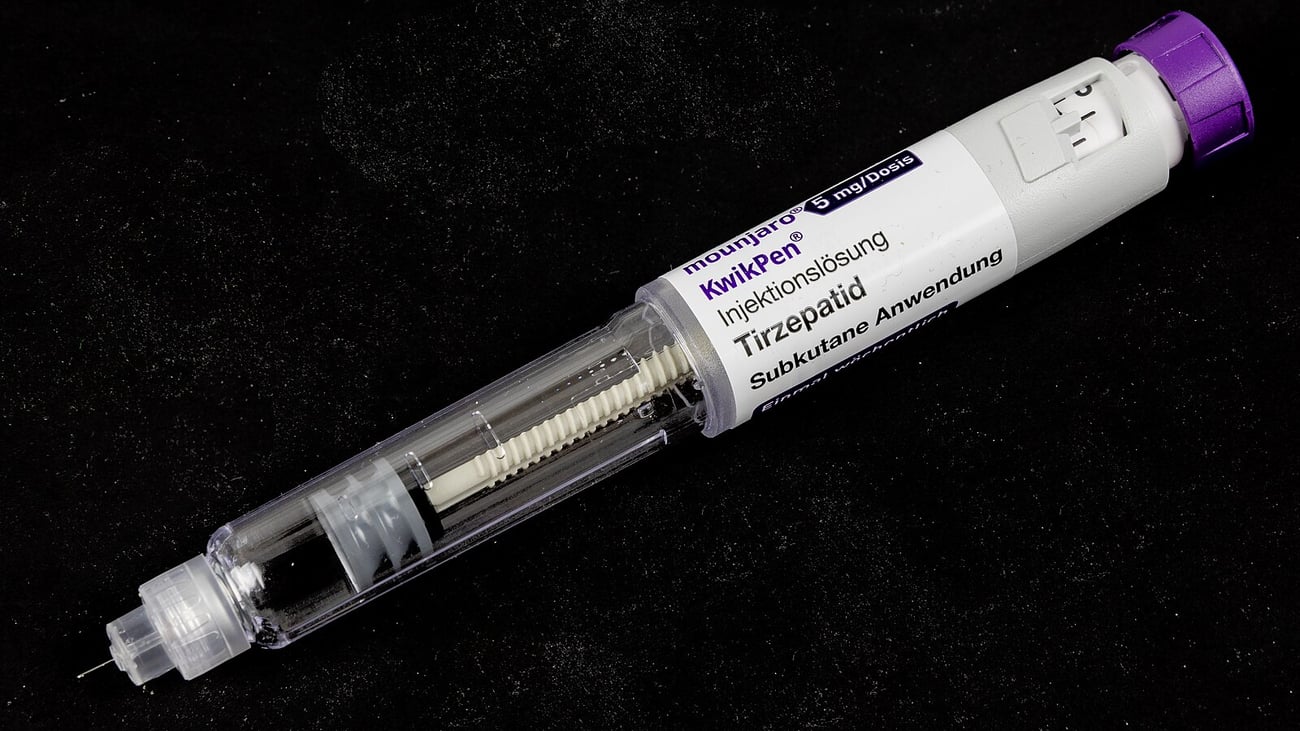
A federal judge in San Francisco has again narrowed Eli Lilly and Co.'s lawsuit against Mochi Health, a telehealth company that sells compounded versions of tirzepatide, the active ingredient in Lilly's FDA-approved Zepbound and Mounjaro [3].
U.S. District Judge Jacqueline Scott Corley on Tuesday partially granted Mochi Health's motion to dismiss Lilly's second amended complaint, throwing out conspiracy claims under the federal Lanham Act against both the Mochi medical defendants and the pharmacy that fills the prescriptions, while allowing conspiracy claims under California's Unfair Competition Law to proceed against Aequita Pharmacy and its parent, Aequita Corporation [3].
"Here, Lilly has plausibly alleged the Aequita defendants participated in a conspiracy to violate the UCL through the corporate practice of medicine. However, Lilly has failed to plausibly allege either the Mochi medical defendants or the Aequita defendants were involved in a conspiracy to violate the Lanham Act," Corley wrote [3].
What the court found
California bars the "corporate practice of medicine," meaning business entities without a medical license cannot make the medical decisions that doctors are supposed to make [3]. Lilly alleges Mochi Health hires the physicians who work at its medical entities, advertises for them, supplies "diagnostic protocols" for obesity medicine, and has unilaterally changed patients' compounded doses for business rather than medical reasons [3].
Lilly also alleges the Aequita entities are controlled by Abraham Chaibi, the husband of Mochi Health CEO Myra Ahmad, and that the pharmacy "turned a blind eye" to the identical prescriptions it was compounding while following Ahmad's instructions to cut costs [3]. Corley found it reasonable to infer Aequita knew about the alleged scheme, noting Ahmad had "significant control" over the pharmacy's procedures for filling prescriptions and that Aequita had "significant financial motivation" to take part [3].
On the false-advertising side, the judge said Lilly had not shown that the Mochi medical defendants or Aequita did anything to advance an alleged conspiracy to falsely advertise, beyond simply selling the compounded drug [3]. Those Lanham Act claims were dismissed without leave to amend unless Lilly turns up supporting facts in discovery [3].
The sources describe the corporate relationships slightly differently. Courthouse News reports Aequita's entities are controlled by the CEO's husband [3], while earlier coverage described Aequita Pharmacy as the compounder that "owns Mochi Health" [2]. The exact ownership structure is not resolved in these reports.
Why it matters for patients
None of this is a finding that any compounded tirzepatide harmed anyone. It is a procedural ruling on which legal theories can move ahead, and the allegations have not been proven [3].
Still, the case touches issues that affect people who buy weight-loss drugs through telehealth sites. Compounded versions of these medicines do not require FDA approval and, according to large drugmakers, are not tested as rigorously as approved drugs for safety, effectiveness and quality [3]. In an earlier ruling, the court noted Lilly's argument that studies point to a higher rate of adverse side effects among users of compounded GLP-1 drugs compared with FDA-approved versions, and referenced findings that consumers are confused about the difference between the two [2].
The surviving claim centers on who is actually making the medical call. Lilly's theory is that a company, not a clinician, decided what dose a patient received [3]. The California Medical Association filed a brief supporting Lilly, saying the complaint "includes many allegations that, if proven, depict both classic and more nuanced violations" of the corporate practice of medicine rules [2].
Separately, Washington state's Pharmacy Quality Assurance Commission halted production at the Aequita facility after finding it let untrained and unqualified staff perform sterile compounding and failed to properly supervise workers [2].
What happens next
The case moves into discovery. A Lilly spokesperson said the ruling lets it proceed on all three of its claims, including the civil conspiracy claim over state corporate-practice-of-medicine limits, and pointed to more than a dozen permanent injunctions the company has obtained against telehealth companies, medspas and mass compounders [3]. Mochi has said it "operates lawfully and in the best interest of patients" and expects discovery to show that [2]. Representatives for the defendants did not respond to a request for comment on the latest order [3]. No trial date appears in the sources.
Sources
- https://www.mealeys.com/mealeys/mealeys-drugs-devices
- https://trial.medpath.com/news/federal-judge-allows-eli-lilly-lawsuit-against-compounded-tirzepatide-seller-to-proceed
- https://www.courthousenews.com/eli-lilly-lawsuit-against-weight-loss-drug-seller-gets-another-shave/
- https://www.law360.com/articles/2522881/calif-judge-hands-eli-lilly-mixed-bag-in-compound-drug-suit
Semaglutides.org is for information only and is not medical advice. Always talk to a licensed healthcare provider about your own care. Some links to telehealth services are affiliate links, labeled where they appear.