FDA approves Zepbound, giving tirzepatide a weight-loss brand
On November 8, 2023, the FDA approved Zepbound, a second brand of tirzepatide for weight management, separate from the diabetes brand Mounjaro — a split that still shapes US prescriptions, coverage and pricing.
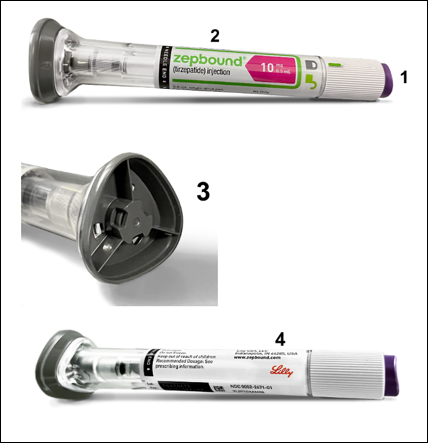
The FDA first approved Zepbound (tirzepatide) on November 8, 2023, for chronic weight management [5]. The molecule was not new: tirzepatide had already been approved in May 2022 under the brand name Mounjaro to improve blood sugar control in adults with type 2 diabetes [5]. Eli Lilly chose to market the same active ingredient under a second name for a second use, creating the two-brand structure US patients still navigate.
What the approval covered
Zepbound was cleared for use with a reduced-calorie diet and increased physical activity to reduce excess body weight and maintain that reduction long term in adults with obesity, or adults with overweight who also have at least one weight-related health condition [4][5]. The approval rested on two Phase 3 trials, SURMOUNT-1 (adults without type 2 diabetes) and SURMOUNT-2 (adults with type 2 diabetes), both 72 weeks long [5].
In SURMOUNT-1, average weight loss was 15.0% (34 lbs) on 5 mg, 19.5% (44 lbs) on 10 mg and 20.9% (48 lbs) on 15 mg, compared with 3.1% (7 lbs) on placebo [1][5]. In SURMOUNT-2, people on 15 mg lost an average of 15.7% (34.4 lbs) and those on 10 mg lost 13.4% (29.8 lbs), versus 3.3% (7.0 lbs) on placebo [5].
The label carries a boxed warning about the risk of thyroid C-cell tumors, based on rat studies; it is unknown whether tirzepatide causes these tumors in humans [4][5]. Zepbound is contraindicated in people with a personal or family history of medullary thyroid carcinoma or with Multiple Endocrine Neoplasia syndrome type 2 [4]. The drug is given by weekly injection, starting at 2.5 mg for four weeks, with maintenance doses of 5 mg, 10 mg or 15 mg for weight reduction [4]. Zepbound was later also approved to treat moderate-to-severe obstructive sleep apnea in adults with obesity [4][5].
Two brands, one molecule
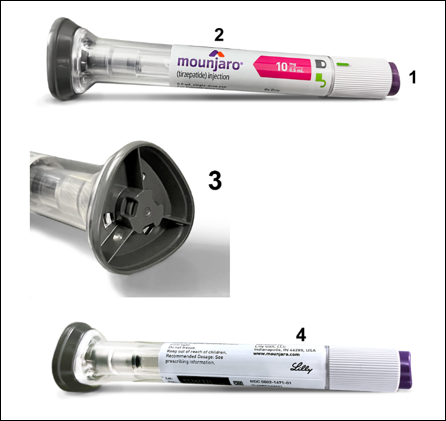
Because Mounjaro and Zepbound contain the same drug, the Zepbound label states that coadministration with other tirzepatide-containing products, or with any GLP-1 receptor agonist, is not recommended [4]. Lilly reinforced that point in a June 2024 open letter, which also said Mounjaro and Zepbound are the only FDA-approved tirzepatide medicines, are approved only for adults 18 and older, and are not approved for cosmetic weight loss [3].
The split brands arrived into an unusually hot market. IQVIA analysts wrote that Mounjaro's 2022 launch and Zepbound's 2023 launch pushed the anti-obesity market into "mega-blockbuster" status, and that aside from one hepatitis C drug, the two tirzepatide brands are the only launch products ever to pass $5 billion in sales in their first 12 months [2]. By the second quarter of 2025, 11 million unique patients were using a GLP-1 across all indications [2].
Why it matters for patients
The practical effect of two names is administrative. In the US, the brand written on a prescription generally signals the indication behind it — Mounjaro for type 2 diabetes, Zepbound for weight management and sleep apnea — and insurers commonly treat diabetes and obesity coverage differently. Patients comparing notes online, or reading coverage from other countries, may see the same molecule discussed under a different brand; the sources reviewed here do not describe how tirzepatide is branded or labeled outside the United States, so that is not something to assume from US materials.
The two-name structure also matters for safety: the label's limitation on combining tirzepatide products means a person is not meant to be on both brands, or on tirzepatide plus a GLP-1 like semaglutide, at the same time [4]. Common side effects listed include nausea, diarrhea, vomiting, constipation, abdominal pain, indigestion, injection site reactions, fatigue, belching, hair loss and reflux [1][4].
Where things stand
As of February 2026, Lilly said Zepbound was the most prescribed weight management medication in 2025 and the top prescribed injectable obesity medicine, and that self-pay prices through its LillyDirect platform start at $299 per month for the 2.5 mg dose [1]. In the open-label SURMOUNT-5 trial, people on maximum tolerated Zepbound doses lost an average of 20.2% (50 lbs) versus 13.7% (33 lbs) on injectable Wegovy (semaglutide) over 72 weeks [1].
Images from the sources
Sources
- https://investor.lilly.com/news-releases/news-release-details/zepbound-tirzepatide-most-prescribed-weight-management
- https://www.iqvia.com/locations/united-states/blogs/2025/09/obesity-deep-dive-the-unparalleled-launch-success-of-mounjaro-and-zepbound
- https://investor.lilly.com/news-releases/news-release-details/open-letter-eli-lilly-and-company-regarding-certain-practices
- https://pi.lilly.com/us/zepbound-uspi.pdf
- https://www.drugs.com/history/zepbound.html
- https://www.prnewswire.com/news-releases/lilly-reports-full-q4-2024-financial-results-and-provides-2025-guidance-302369432.html
- https://www.fda.gov/media/191437/download
- https://www.accessdata.fda.gov/drugsatfda_docs/label/2026/217806s041lbl.pdf
- https://glp3planner.com/resources/zepbound-vs-ozempic
- https://www.harrisbeachmurtha.com/insights/glp-1-weight-loss-drugs-off-shortage-list-deadlines-to-stop-compounding/
- https://api.fda.gov/drug/drugsfda.json?search=application_number%3ANDA217806
- https://www.accessdata.fda.gov/scripts/cder/daf/index.cfm?event=overview.process&ApplNo=217806
- https://dailymed.nlm.nih.gov/dailymed/drugInfo.cfm?setid=487cd7e7-434c-4925-99fa-aa80b1cc776b
- https://www.accessdata.fda.gov/drugsatfda_docs/appletter/2023/217806Orig1s000ltr.pdf
Semaglutides.org is for information only and is not medical advice. Always talk to a licensed healthcare provider about your own care. Some links to telehealth services are affiliate links, labeled where they appear.