Zepbound launches at $1,059.87 a month, flat across all doses
Eli Lilly brought Zepbound (tirzepatide) to market with a single monthly list price for every strength, about $1,059 for a 28-day supply — the number every later discount has been measured against [1].
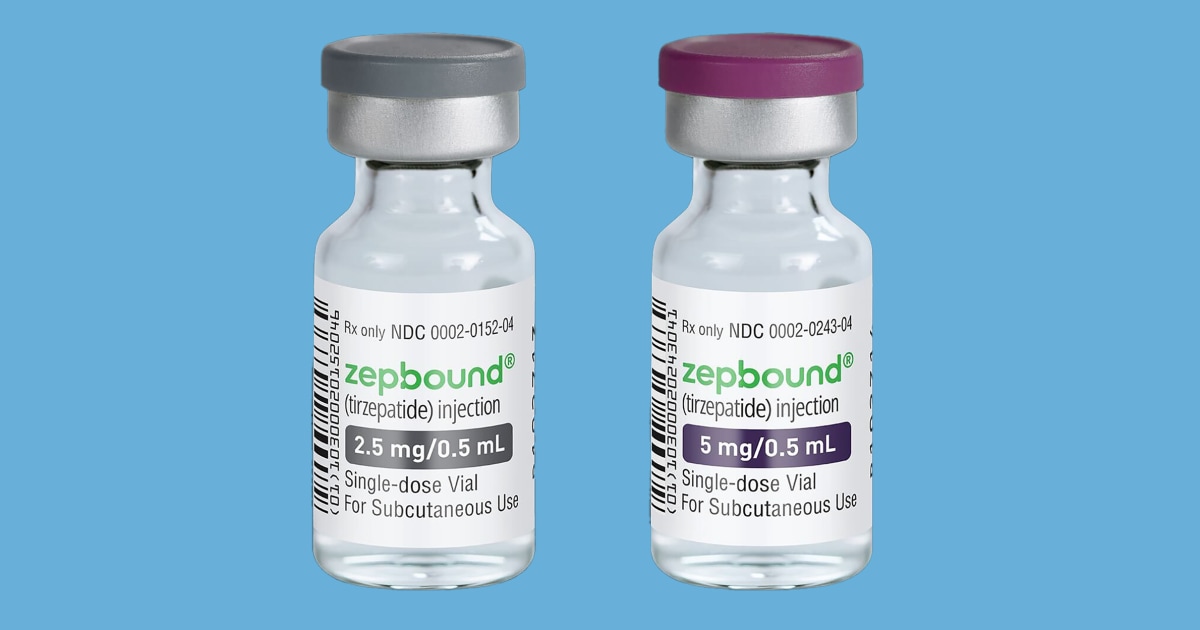
Eli Lilly launched Zepbound, its obesity brand of tirzepatide, with one list price that applied to all six strengths. NBC News reported the monthly list price as $1,059 "regardless of the dosage" before the company began discounting lower doses in 2024 [1]. That flat structure meant the sticker price did not change as a patient moved from the 2.5 mg starting dose up to 15 mg.
One caveat on the exact figure: the sources here cite $1,059, not $1,059.87. The extra cents are not confirmed in the material provided, so treat the precise decimal as unverified.
What a flat list price actually means
List price, also called wholesale acquisition cost or WAC, is the price at which Lilly sells to wholesalers — not what most people pay at the counter [2]. Lilly's own pricing page says the amount a patient pays "will largely depend on your prescription drug insurance plan" [2]. Still, the list price matters, because it is the starting point for insurer negotiations, for coinsurance that is calculated as a percentage, and for anyone paying cash without a discount program.
A flat price across doses also removed a common wrinkle in drug pricing. With many medicines, higher strengths cost more. With Zepbound at launch, the 28-day cost was the same whether a person stayed at the starting dose or titrated to the top dose [1].
How the number has moved since
On Aug. 27, 2024, Lilly cut prices on the two lowest doses: $399 a month for 2.5 mg and $549 a month for 5 mg, down from the $1,059 monthly list price [1]. Those lower prices came with conditions. The discounted vials were sold only through Lilly's telehealth platform, LillyDirect, were not covered by insurance, and did not qualify for Lilly's savings card program [1]. The vials also require drawing the medicine out with a syringe rather than using a single-dose auto-injector pen [1].
Lilly said the change was about supply as well as cost. "These new vials not only help us meet the high demand for our obesity medicine, but also broaden access for patients seeking a safe and effective treatment option," said Patrik Jonsson, president of Lilly USA [1].
Reaction was mixed. Dr. Maria Daniela Hurtado Andrade, an endocrinologist at the Mayo Clinic in Jacksonville, Florida, noted that $399 a month is still almost $5,000 a year and said "the majority of patients will not be able to afford the medication, still" [1]. Dr. Shauna Levy of the Tulane Bariatric Center called it an "overall win" for the obesity community [1].
Lilly's current pricing page, citing WAC data accessed Jan. 1, 2026, lists Zepbound at $499 to $1,086.37 per fill — a range, not a single flat number [2]. The same page lists direct-to-patient self-pay prices of $299, $399, $499, $699, $699 and $699 for the 2.5 mg, 5 mg, 7.5 mg, 10 mg, 12.5 mg and 15 mg doses, available as a four-count single-dose vial or a single-patient-use KwikPen [2]. Separately, people with commercial drug insurance that covers Zepbound "may be eligible to pay as low as $25" for a one- or three-month supply of single-dose pens, with government beneficiaries excluded and monthly and annual limits applying [2].
Why it matters for patients
The launch list price is the benchmark behind almost every "savings" claim you will see for tirzepatide. When a program advertises a discount, it is usually measured against a four-figure monthly list price [1][2]. Knowing the baseline helps a person judge whether an offer is a genuine cut or simply the cash price for a product that was never going to be billed at list.
The practical cost also depends on the channel. Sources show that the cheapest routes have historically been cash-pay and tied to vials and Lilly's own platform, and that choosing them can mean giving up insurance coverage and savings-card eligibility [1][2]. Insured patients may face a very different number [2].
What happens next
Aug. 27, 2024: Lilly announced $399 and $549 cash pricing for the two lowest doses [1]. Jan. 1, 2026: Lilly's pricing page reflects a $499–$1,086.37 WAC range and a self-pay menu topping out at $699 [2]. Whether those figures hold, and how insurers respond, is not addressed in these sources.
Images from the sources
Sources
Semaglutides.org is for information only and is not medical advice. Always talk to a licensed healthcare provider about your own care. Some links to telehealth services are affiliate links, labeled where they appear.