Tirzepatide passes Keytruda to become the world's best-selling medicine
Eli Lilly's tirzepatide, sold as Mounjaro and Zepbound, hit $10.1 billion in third-quarter sales and passed Merck's Keytruda as the world's top-selling drug [1].
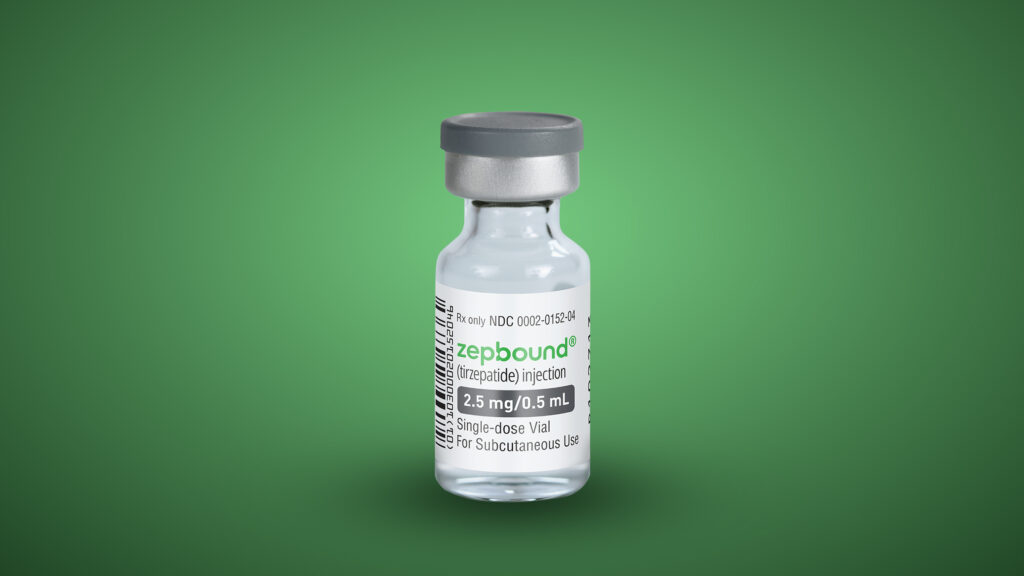
Eli Lilly said on Oct. 30 that tirzepatide — sold as Mounjaro for type 2 diabetes and Zepbound for obesity — brought in $10.1 billion in the third quarter of 2025, more than Merck's cancer immunotherapy Keytruda at $8.1 billion [1]. That makes tirzepatide the world's best-selling medicine, a title Merck had held since 2023 [1].
The lead holds for the year so far, too. Tirzepatide's year-to-date sales reached $24.8 billion through the first nine months of 2025, against $23.3 billion for Keytruda [1].
One important caveat: the milestone belongs to the molecule, not to a single brand. Lilly's own numbers break out Mounjaro at $6.52 billion for the quarter, up 109% from a year earlier, and Zepbound at $3.59 billion, up 185% [2]. Keytruda, by contrast, is one brand. Whether you call tirzepatide the top seller depends on whether you count two products together.
The numbers behind the quarter
Lilly's total revenue was $17.60 billion in the quarter, up 54% from a year earlier, which the company attributed to volume growth from Mounjaro and Zepbound [2]. Revenue rose 62% on volume but fell 10% because of lower realized prices — the amount Lilly actually collects after rebates and discounts [2].
In the U.S., revenue climbed 45% to $11.30 billion, with volume up 60% and prices down 15% [2]. Lilly said part of that price drop reflects a one-time accounting adjustment in the same quarter of 2024; setting that aside, U.S. prices fell by high single digits [2]. Mounjaro's U.S. sales were $3.55 billion, up 49%, while sales outside the U.S. jumped to $2.97 billion from $728.0 million a year ago [2]. Zepbound's U.S. revenue rose 184% to $3.57 billion [2].
Lilly raised its full-year 2025 revenue guidance to a range of $63.0 billion to $63.5 billion [2]. The company also said it announced two new manufacturing facilities, in Virginia and Texas, plus an expansion of its Puerto Rico site [2].
Why it matters for patients
The headline is a business milestone, but a few pieces of it touch people who fill these prescriptions.
First, the volume numbers suggest far more people are getting tirzepatide than a year ago — U.S. volume was up 60% [2]. Supply and manufacturing capacity have been a recurring worry for GLP-1 users, and Lilly is pointing to new plants in Virginia and Texas and an expanded Puerto Rico site as part of its response [2].
Second, and less obvious: Lilly is selling much more product at lower net prices. Realized prices fell 10% worldwide and by high single digits in the U.S. after adjusting for a one-time item [2]. "Realized price" is not the same as what any individual pays at the pharmacy counter — it reflects rebates and discounts negotiated with insurers and middlemen. The sources do not break out what changed for cash-pay customers versus insured ones, so it is not known from these filings how much of that decline reached patients directly.
Third, market leadership does not say anything about whether one drug works better for a given person. Keytruda and tirzepatide treat completely different conditions. Sales rank reflects how many people use a drug and what it costs, not comparative effectiveness.
What happens next
Lilly said its pipeline progress in the quarter included positive results from four Phase 3 trials of orforglipron, an oral GLP-1, across type 2 diabetes and obesity, with plans to file with global regulators for obesity by the end of 2025 [2]. An oral option would be a different kind of product than the weekly injections that drove this quarter's numbers, though approval timing is not addressed in these sources.
Lilly's full-year results, which will show whether tirzepatide holds the annual sales crown, are not yet reported. The company's raised guidance of $63.0 billion to $63.5 billion for 2025 is the current marker to watch [2].
Sources
Semaglutides.org is for information only and is not medical advice. Always talk to a licensed healthcare provider about your own care. Some links to telehealth services are affiliate links, labeled where they appear.