Lilly adds $4.5 billion in Indiana, where tirzepatide active ingredient will be made
Eli Lilly is putting another $4.5 billion into its Lebanon, Indiana campus, where a plant set to open in 2027 will make the active ingredient in Mounjaro and Zepbound [1][2].
Eli Lilly said on May 6, 2026 that it will invest an additional $4.5 billion across two of its three sites in Lebanon, Indiana, including the active pharmaceutical ingredient (API) plant that will produce tirzepatide, the molecule in Mounjaro for type 2 diabetes and Zepbound for obesity [1][2]. The new money brings Lilly's Indiana capital commitments to more than $21 billion since 2020, and its total US manufacturing commitments to more than $50 billion over the same period [1][2].
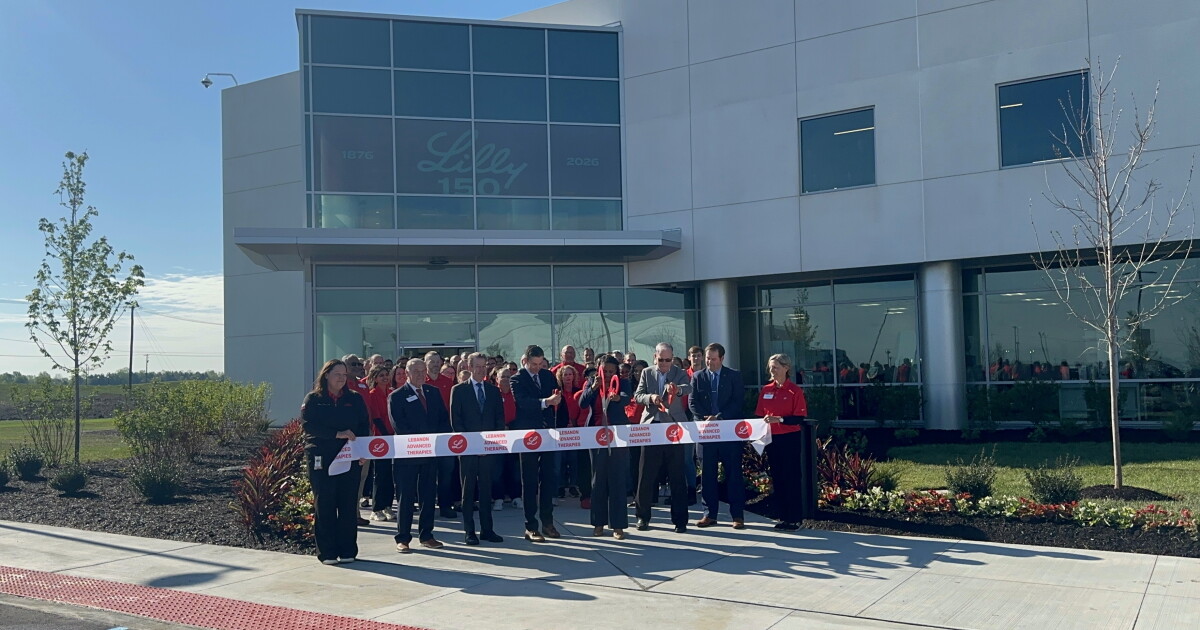
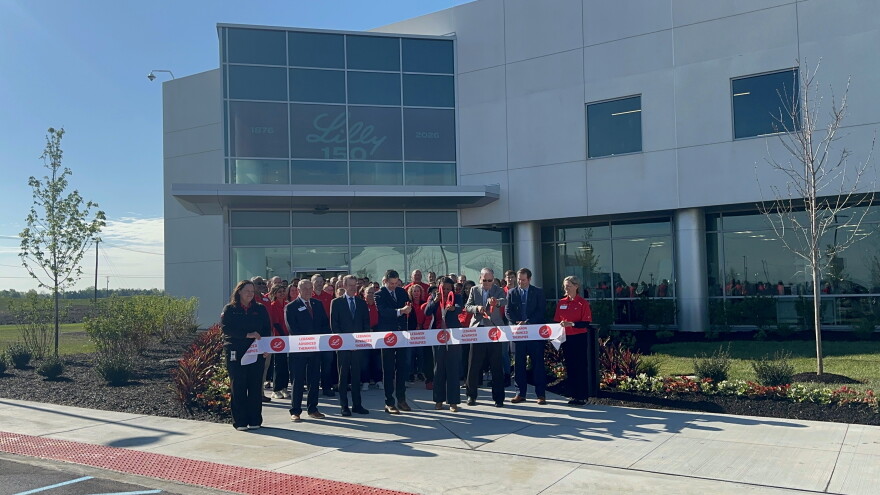
The announcement came at a ribbon-cutting for Lilly Lebanon Advanced Therapies, the company's first dedicated genetic medicine manufacturing plant and the first of three facilities to open on the Lebanon campus [1][5]. The other two are Lilly Lebanon API, still under construction, and the Lilly Medicine Foundry, a $4.5 billion, 1.2 million-square-foot research and clinical-trial manufacturing complex scheduled for completion in 2027 [2].
What the API plant will make
Lilly first announced in 2024 that both Zepbound and Mounjaro would be made at the Lebanon API site [1]. The new investment widens that list: the company now plans to produce Foundayo (orforglipron), its recently approved once-daily GLP-1 pill for weight management, and retatrutide, an investigational once-weekly triple hormone receptor agonist that is still in Phase 3 trials and is available only to clinical trial participants [1][2][5].
Chair and CEO David Ricks said the company's "evolving pipeline" and expected demand drove the extra spending, and that "when our Lebanon API site opens in 2027, it will be the largest API production site in U.S. history" [1]. Fierce Pharma reports the 600-acre campus, in the LEAP Research and Innovation District about 28 miles northwest of Lilly's Indianapolis headquarters, broke ground in April 2023 [2].
An API plant makes the drug substance itself — the tirzepatide or orforglipron molecule — before it is filled into pens or pressed into tablets. That step has historically been a bottleneck for GLP-1 supply, though the sources here do not give capacity figures, production volumes or projected doses per year for the Lebanon site.
The wider buildout
Lebanon is one piece of a larger US expansion. In February 2025, Lilly announced a $27 billion plan for four new domestic plants, later identified as API sites in Virginia ($5 billion), Alabama ($6 billion) and Houston, Texas ($6.5 billion), plus a $3.5 billion injectables and device facility in Pennsylvania [2]. Lilly says it plans to break ground on several of those recently announced sites this year [1].
The spending is happening against a policy backdrop. Lilly attributed the investments to "policies that promote domestic manufacturing" [1]. Fierce Pharma notes that President Donald Trump has used the threat of tariffs to push drugmakers to build in the US, and that industry onshoring pledges totaled $370 billion in 2025, according to a report from DPR Construction [2].
Why it matters for patients
More US-based API capacity is aimed at supply, not price. Nothing in Lilly's announcement or the accompanying coverage says the Lebanon investment will change the list price, cash price or insurance coverage of Mounjaro, Zepbound or Foundayo [1][2][5]. Any effect on what people pay at the pharmacy is not addressed in these sources.
What the plant could affect is availability. Tirzepatide made in Indiana instead of overseas would also be less exposed to import tariffs, which have been a driver of drugmakers' onshoring decisions [2]. But the API site does not open until 2027 [1][5], so it will not change supply this year.
For people watching the pipeline, the inclusion of retatrutide in the plant's plans is a signal that Lilly is building capacity ahead of a possible approval. Retatrutide is not approved and its trial results and timeline are not described in these sources [1].
What happens next
- 2026: Lilly plans to break ground on several recently announced US sites [1].
- 2027: Lilly Lebanon API is due to open [1][5]; the Lilly Medicine Foundry is scheduled for completion the same year [2].
- The week after May 6, 2026: Indiana University's Kelley School of Business was set to release a report finding Lilly accounts for 70% of Indiana's pharmaceutical GDP and that every Lilly job supports more than two additional jobs statewide [1][2].
Images from the sources
Sources
- https://investor.lilly.com/news-releases/news-release-details/lilly-commits-additional-45-billion-across-indiana-manufacturing
- https://www.fiercepharma.com/pharma/lilly-invest-additional-45b-its-massive-indiana-complex
- https://iedc.in.gov/events/news/details/2026/05/29/indiana-is-open-for-business-may-s-jobs-and-wages-wins
- https://www.prnewswire.com/news-releases/lilly-commits-additional-4-5-billion-across-indiana-manufacturing-sites-opens-first-dedicated-genetic-medicine-facility-302763332.html
- https://www.wfyi.org/wfyi-news/2026-05-06/lilly-unveils-new-genetic-medicine-facility-in-lebanon-leap-district-and-4-5-billion-investment
Semaglutides.org is for information only and is not medical advice. Always talk to a licensed healthcare provider about your own care. Some links to telehealth services are affiliate links, labeled where they appear.