Fact-checkers and KFF say the drug price drop has more causes than the administration's policies
Fact-checkers say the sharpest one-year drop in US drug prices since 1963 likely owes more to Medicare negotiation and GLP-1 market competition than to the administration's new pricing deals.
Prescription drug prices fell 3.1% over the past year, the steepest annual drop since 1963, according to Bureau of Labor Statistics data released in mid-August [1][2]. Prices dropped 0.8% in July alone and have fallen 3.3% since the start of 2026, the sharpest six-month decline since the government began tracking the measure in 1947 [2].
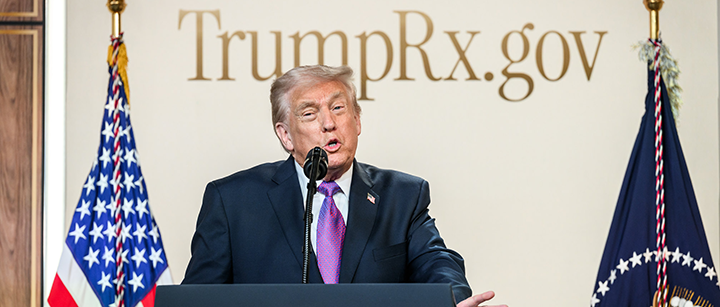
President Trump and administration officials have credited the decline to "most-favored-nation" deals struck with drug companies and the TrumpRx website, which lists cash-pay discounts on certain drugs [1][2]. But drug-pricing experts told FactCheck.org and the Associated Press the real story is more complicated [1][2].
Cynthia Cox, a senior vice president at KFF, said both Republican and Biden-era policies may be contributing, but that "market forces at play, in particular around GLP-1 drugs, that are really hard to ignore" are also a factor [1]. Juliette Cubanski, also of KFF, said the CPI figure blends many forces and "I don't think we can attribute this price reduction to any one specific policy change or initiative" [2].
Jeromie Ballreich, a Johns Hopkins pharmaceutical economist, said most-favored-nation pricing currently shows up in the consumer price index only through TrumpRx, since the broader deals mostly apply to new drugs, state Medicaid programs, and certain GLP-1 drugs sold through Medicare or Medicaid — not to existing drugs bought through private insurance, which covers most Americans [1]. He said TrumpRx itself is "not a big factor in the market" because it serves a comparatively small group of cash-paying patients [1]. The White House says TrumpRx has generated more than $700 million in savings, though it has not detailed how that figure was calculated [1][2]; that sum would represent less than 0.2% of the $467 billion spent on prescription drugs in the US in 2024 [1].
Experts pointed instead to the 2022 Inflation Reduction Act, which let Medicare negotiate prices on top-selling drugs for the first time, with new negotiated prices for the first 10 drugs taking effect in January [2]. Harvard's Dr. Benjamin Rome, Vanderbilt's Stacie Dusetzina, and Cubanski all said that change likely affected the aggregate numbers [2]. Dusetzina said in an email that MFN policies "are under development and have not affected payers in the index," and that the change is "likely to be more directly related to the IRA's policies" [2]. Generic and biosimilar competition — for drugs like Humira and Stelara — was also cited as a driver of falling brand-name prices [2].
Experts also flagged a separate Trump administration policy lowering GLP-1 weight-loss drug prices for certain eligible Medicare enrollees that took effect in July, though with only one month of data available, its effect on the broader index is not yet clear [2].
Why it matters for patients
The CPI figure describes what pharmacies are paid by insurers and consumers combined — it is not a direct measure of what any individual pays out of pocket [1][2]. Rome noted that this kind of price index "is not going to adequately capture consumers' experience with healthcare" the way it does for groceries or gas [2]. For someone on Ozempic, Wegovy, Mounjaro, Zepbound, or another GLP-1 medication, what shows up on a national price chart may not match what shows up on a pharmacy receipt, since coverage, insurance plan design, and whether a drug has a lower-cost generic or biosimilar alternative all shape actual costs [1][2]. TrumpRx may offer savings for some cash-paying patients, including some buying GLP-1 drugs, but most people with insurance will likely get a better deal through their plan, and some listed drugs have cheaper generics sold elsewhere [1][2]. Sen. Elizabeth Warren has also questioned the administration's savings claim, noting that Health Secretary Robert F. Kennedy Jr. has said TrumpRx does not store patient, health, or prescription information, which she argues makes any savings figure hard to verify [2].
What happens next
The scope of the administration's MFN agreements with drug companies remains unclear because the contracts have not been made public, and models for putting MFN pricing into effect in federal health programs have not yet gone into effect [1][2]. It is not yet known how future rounds of Medicare price negotiations or additional company deals, including nine midsize biotech agreements announced August 31, will show up in later CPI reports [1].
Images from the sources
Sources
Semaglutides.org is for information only and is not medical advice. Always talk to a licensed healthcare provider about your own care. Some links to telehealth services are affiliate links, labeled where they appear.