Lilly Q2 revenue jumps 48% to $23 billion while its obesity pill disappoints
Eli Lilly's tirzepatide drugs kept growing fast in the second quarter while its new obesity pill Foundayo brought in $98 million, less than analysts expected, as US prices for GLP-1s keep falling.
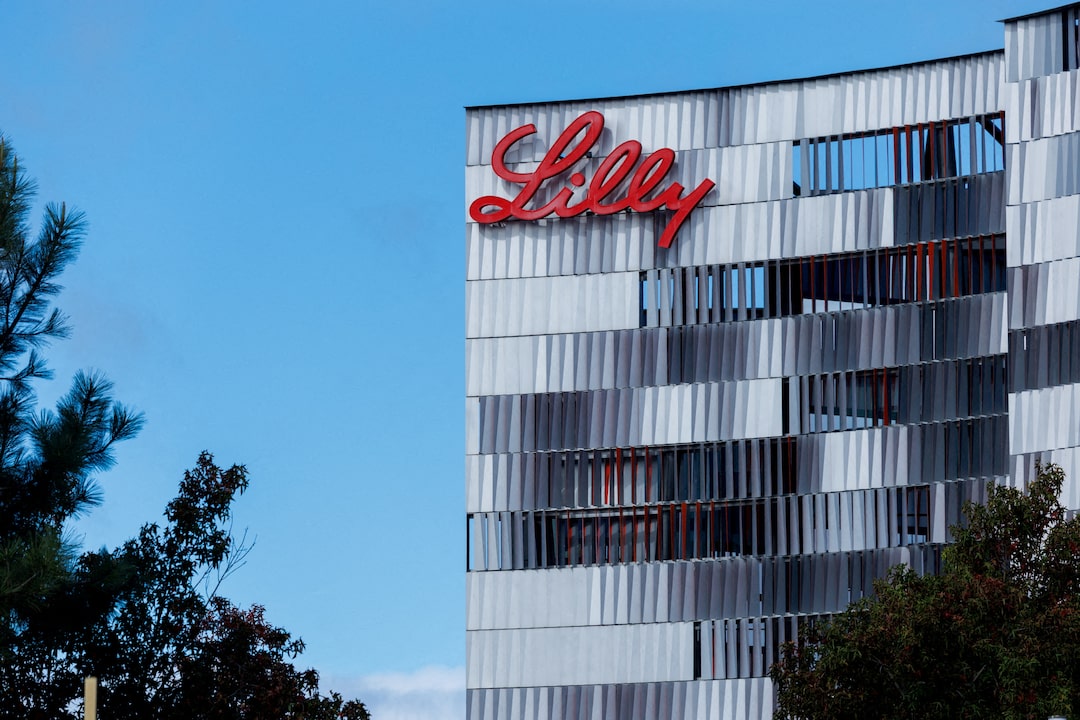
Eli Lilly reported second-quarter 2026 revenue of $23.0 billion on August 5, up 48% from a year earlier, driven mainly by volume growth for Mounjaro and Zepbound [1]. The company's first full quarter of sales for its new obesity pill, Foundayo (orforglipron), came in at $98 million, below Wall Street forecasts [1][3][5].
Mounjaro (tirzepatide) generated $9.94 billion worldwide, a 91% increase, with US sales of $4.8 billion, up 45%, and sales outside the US up 172% to $5.2 billion [1]. Zepbound, the same molecule sold for obesity in the US, Canada and Japan, brought in $4.93 billion, up 46% overall and 44% in the US [1]. Together the two accounted for 64.7% of Lilly's revenue for the quarter [3]. Lilly's earnings presentation put its share of the US obesity and diabetes drug market at 60.9%, against 38.8% for Novo Nordisk [5].
The pill numbers tell a different story. Novo Nordisk reported 3.22 billion Danish kroner (about $497 million) in sales for its Wegovy pill, an oral form of semaglutide that launched in the US on January 5 — about three months before Lilly won FDA approval for Foundayo on April 1 [2]. Analyst expectations for Foundayo varied by source: Reuters cited an average estimate of $105.6 million, while CNBC cited nearly $103 million from FactSet [3][5]. Leerink Partners analyst David Risinger said the result "disappointed," though he pointed to $31 million in United Arab Emirates sales as a sign of global potential [2].
Lilly executives said the pill's launch is picking up. Ilya Yuffa, president of US operations, said prescriptions in the last week of July were about double those a month earlier and that nearly one in four patients starting an oral obesity drug are starting on Foundayo [3]. CEO Dave Ricks said the oral market is "expansionary, it's not cannibalizing Zepbound" demand [5].
Why it matters for patients
The most concrete number for people paying out of pocket is price. Lilly's US revenue rose 33% to $14.4 billion on a 37% jump in volume, while realized prices fell 3% — and would have fallen roughly 9% without accounting adjustments for rebates and discounts [1]. The company specifically named "previously announced reductions in cash-pay prices" for Zepbound as a factor [1]. In other words, far more prescriptions at lower net prices.
The early evidence also suggests pills are not automatically winning on convenience. Lilly CFO Lucas Montarce said injectable GLP-1s account for roughly three of every four new patient starts even with oral options available [3]. In Medicare's obesity drug pilot, which launched in early July and gives eligible seniors a $50 monthly copay for branded GLP-1s, about 80% of patients chose to start on an injectable, according to Yuffa [3][5]. Reuters noted that many industry experts had expected the opposite [3]. BMO Capital Markets analyst Evan Seigerman said the consensus view is that "tirzepatide is the better product... efficacy is what's key" for consumers [3]. Head-to-head efficacy comparisons between Foundayo and the Wegovy pill are not discussed in these sources.
More supply and more competition may follow. Lilly committed an additional $4.5 billion to expand its Indiana manufacturing sites, and said Foundayo is under regulatory review in more than 40 markets with a rollout across all major markets expected in 2027 [1][3].
What happens next
Lilly raised 2026 revenue guidance to $85 billion to $87 billion, up from $82 billion to $85 billion [3][5]. Adjusted earnings per share guidance is now $35.50 to $36.50, trimmed at the top end because of $3.03 per share in deal-related charges [1][5]. Second-quarter non-GAAP EPS of $8.38 beat the LSEG consensus of $6.01 [3][5].
On the pipeline, Lilly has submitted orforglipron for type 2 diabetes in the US, and says the clinical data package for retatrutide — an experimental triple agonist — is now complete for obesity, obstructive sleep apnea and knee osteoarthritis pain, with a US filing planned for the first quarter of 2027 [1]. Approval timelines for either are not yet known.
Sources
- https://investor.lilly.com/news-releases/news-release-details/lilly-reports-second-quarter-2026-financial-results-raises-full
- https://www.fiercepharma.com/pharma/while-sales-lillys-obesity-pill-disappointed-q2-injectables-continue-boom
- https://www.reuters.com/business/healthcare-pharmaceuticals/eli-lilly-raises-annual-revenue-forecast-obesity-diabetes-drug-demand-stay-2026-08-05/
- https://www.prnewswire.com/news-releases/lilly-reports-second-quarter-2026-financial-results-raises-full-year-guidance-and-highlights-continued-growth-and-pipeline-progress-302843165.html
- https://www.cnbc.com/2026/08/05/eli-lilly-lly-earnings-q2-2026.html
Semaglutides.org is for information only and is not medical advice. Always talk to a licensed healthcare provider about your own care. Some links to telehealth services are affiliate links, labeled where they appear.