White House claims credit for the largest prescription drug price drop in sixty years and puts TrumpRx savings at $700 million
The White House linked July's inflation data to its drug pricing deals, saying TrumpRx has saved patients $700 million and that some GLP-1s now start at $149 a month — but analysts say other forces are also driving prices down.
The White House said on August 17, 2026 that prescription drug prices recorded their largest annual decline in more than 60 years, and credited its most-favored-nation (MFN) pricing framework and the TrumpRx platform for the drop [1]. The release said TrumpRx has generated $700 million in savings since it launched, and that GLP-1 medications "that once cost over $1,000 a month are now available starting as low as $149" [1].
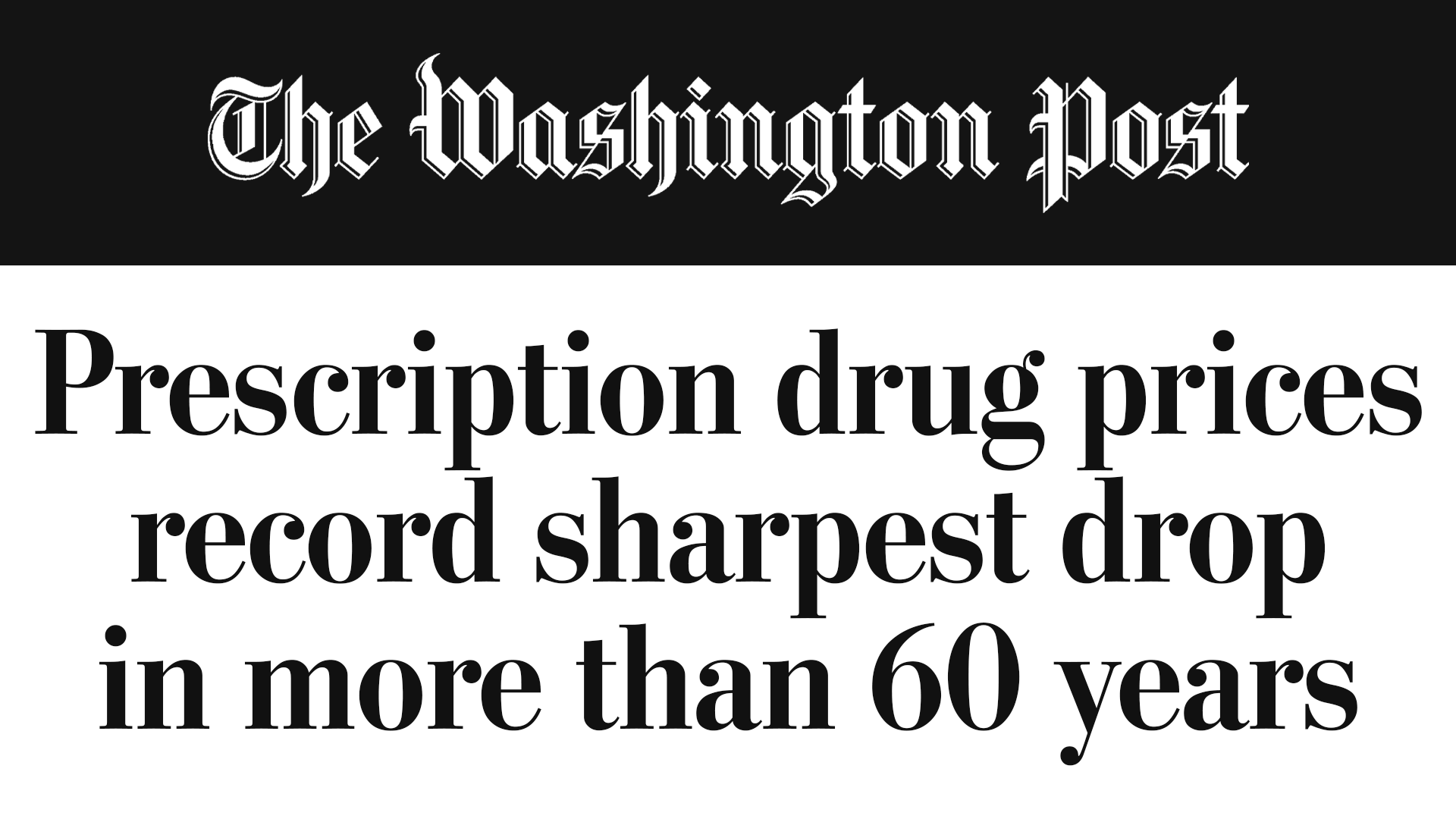
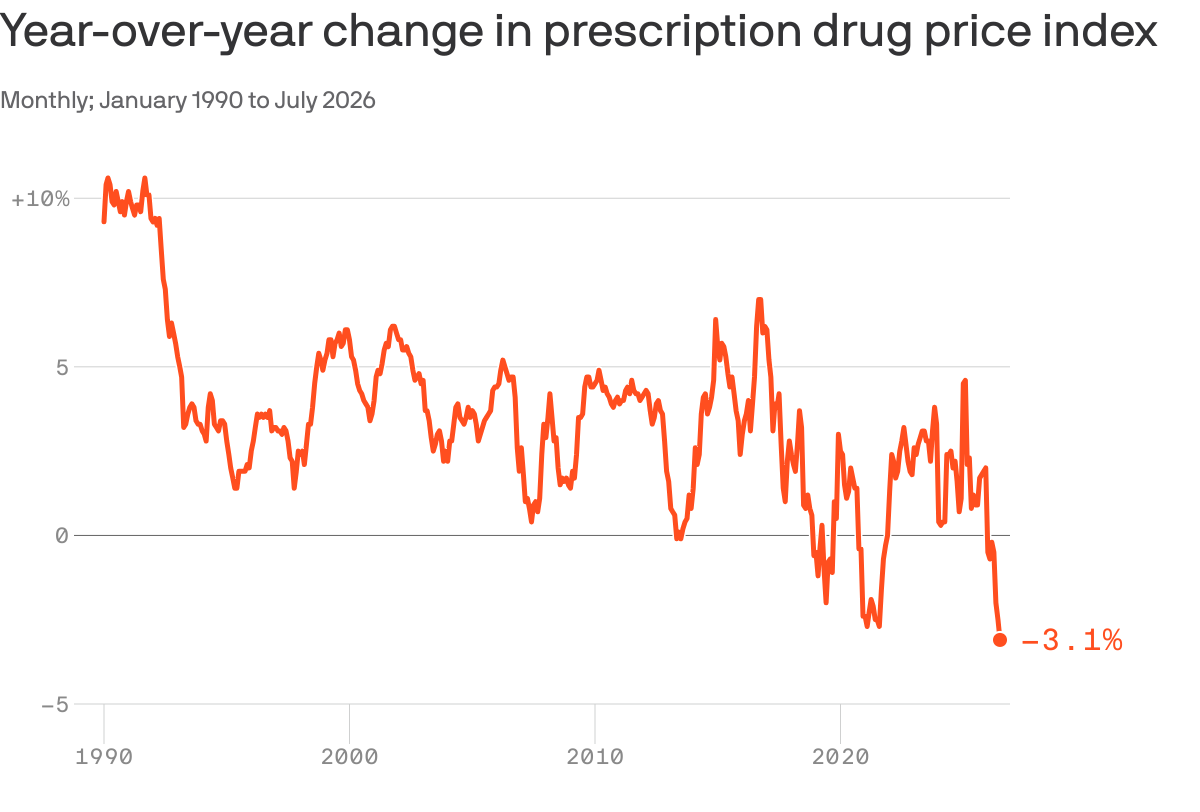
The underlying data comes from the Bureau of Labor Statistics' Consumer Price Index. According to Axios' read of the July CPI, prescription drug prices fell 0.8% in July and were down 3.1% from a year earlier — the steepest annual decline in more than six decades [2]. Prices have not risen in any month in 2026, an unusually long stretch of flat or falling drug prices [2].
What the White House claimed
The release listed several figures. It said prescription drug prices are down 3.9% since the start of the administration and have fallen every month of 2026, while nonprescription drugs are down 2.4% over the same period [1]. Medical care commodities, including equipment and supplies, are down 2.7% over the past year [1]. The Department of Veterans Affairs has locked in more than $10 billion in pharmaceutical savings this fiscal year, the release said [1].
On the MFN framework, the White House said 17 of the world's largest drugmakers — covering roughly 86% of the branded drug market — have agreed to bring U.S. prices in line with the lowest prices paid by comparable developed countries [1]. It also said fertility drugs, inhalers, insulin, cholesterol treatments and dozens of other high-cost drugs have seen cuts of 50% to 90% or more [1]. TrumpRx launched in February 2026 [1].
Note the two different numbers: the White House cites a 3.9% decline since the administration took office [1], while the CPI figure Axios reports is a 3.1% year-over-year drop as of July [2]. Those measure different time spans, so they are not directly comparable.
What outside analysts say
Axios reported that TrumpRx "likely only accounts for part of the decline" [2]. Eli Lilly and Novo Nordisk struck separate deals with the administration that cut cash prices for GLP-1 drugs and expanded Medicare access, which may have added to downward pressure [2]. But Medicare price negotiations created under the Inflation Reduction Act also took effect in January for 10 of the program's costliest drugs, with negotiated prices as much as 79% below list prices [2].
Geoffrey Joyce, a health economist at USC, told Axios that TrumpRx makes discounts easier to find but often points consumers to prices that already exist. "If you were going to give policy credit, you'd have to say the IRA," Joyce said, while adding that much of the decline is driven by market forces [2]. White House spokesperson Kush Desai called crediting the IRA "idiotic and unfounded," arguing the negotiated prices did not deliver meaningful savings beyond existing insurer discounts [2].
Axios also noted that as blockbuster drugs lose patent protection, cheaper generics enter the market — a shift the inflation gauge is built to capture — and that heated competition among GLP-1 drugs is pushing cash-pay prices down [2].
Why it matters for patients
The prescription drug CPI tracks what pharmacies receive from patients and insurers, including Medicare — not just what a person pays at the counter [2]. Manufacturer rebates paid after the transaction are not captured in the index, the BLS told Axios [2]. That means a falling national index does not automatically mean a lower copay for any individual.
Axios put it directly: falling prices in the aggregate do not necessarily translate into relief for consumers, given how complicated drug pricing and payment are [2]. KFF polling this spring found six in 10 Americans worried about affording their medications — the largest share since KFF began tracking the question in 2018 — and four in 10 said that in the past year they had not taken a medication as prescribed because of cost [2]. "People don't care about what the true cost of the drug is," Joyce said. "They just say, 'What's my copay?' or 'What's my cost sharing at the pharmacy counter?'" [2]
The sources do not break out which specific GLP-1 products or doses are available at the $149 starting price the White House cited, or what conditions apply [1]. That detail is not yet known from these documents.
What happens next
The White House release points to a December 19, 2025 fact sheet on earlier MFN developments and an August 31, 2026 fact sheet announcing deals with nine additional pharmaceutical manufacturers [1]. It also says hundreds of billions more in long-term savings are projected from the full MFN framework, based on an April 2026 analysis [1]. Future monthly CPI reports will show whether the 2026 streak of flat or falling drug prices continues [2].
Images from the sources
Sources
Semaglutides.org is for information only and is not medical advice. Always talk to a licensed healthcare provider about your own care. Some links to telehealth services are affiliate links, labeled where they appear.